

FC works in the finance sector to build the capacity of financial institutions and their staff, design financial products for underserved groups, conduct research, and facilitate private equity funding with advisory services.
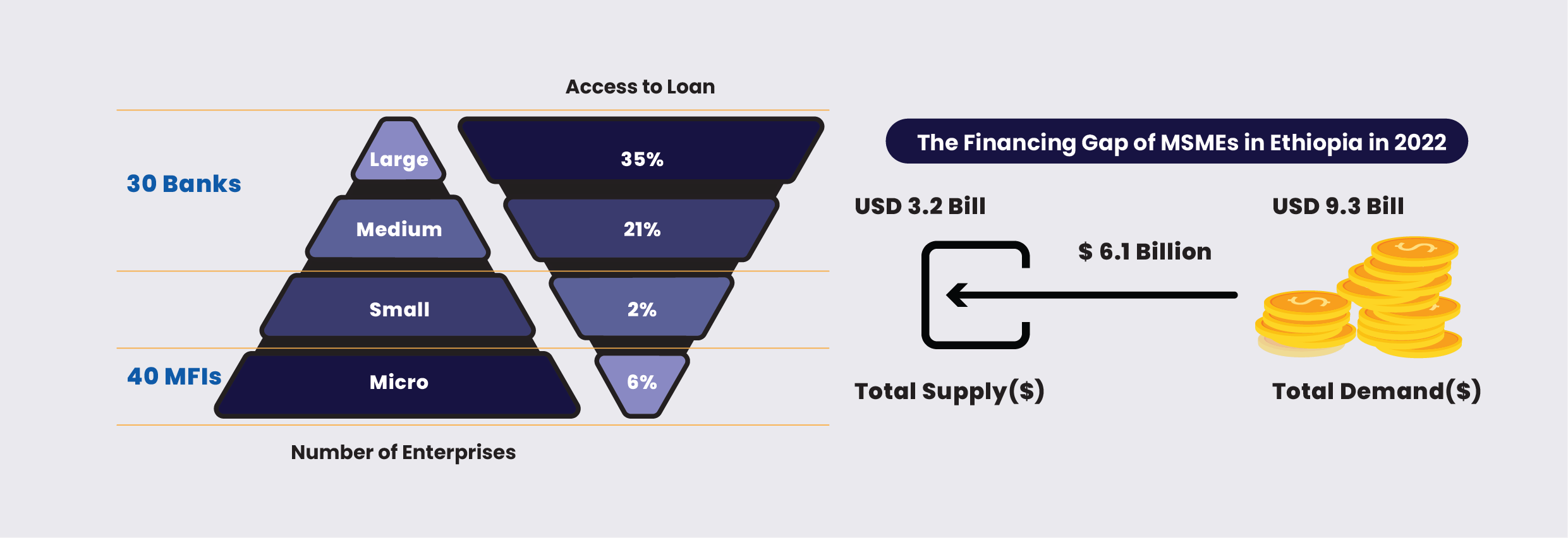
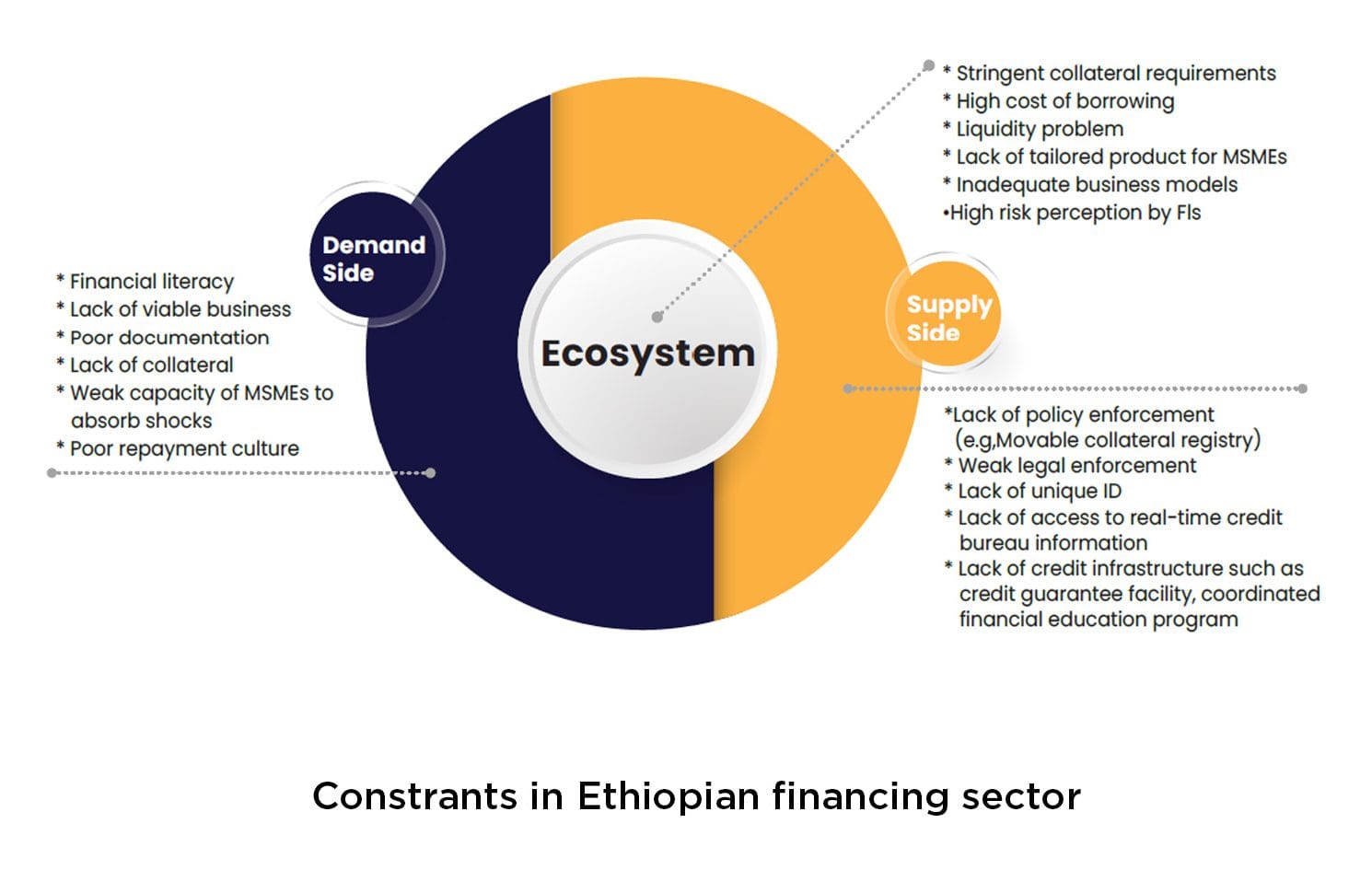
Our studies identify key challenges to equitable access to finance, such as weak institutional capacity, unfit business models, high collateral requirements, liquidity issues, unbankability of MSMEs, and a poor enabling environment. These factors have created a $6.1 billion gap between MSMEs’ financing demand and supply in Ethiopia as of 2022.
FC designs and implements interventions at the supply, demand, and system levels, while also conducting research to broaden access to finance.
Our efforts have unlocked over USD 150 million for more than 120,000 MSMEs, supporting over 700,000 jobs. We continue to address fundamental issues through complementary interventions.
Our efforts have unlocked over USD 150 million for more than 120,000 MSMEs, supporting over 700,000 jobs. We continue to address fundamental issues through complementary interventions.
Grants management
Design and manage grants provided to withstand economic shocks caused by COVID-19 and other natural or manmade crises.
Financial literacy
In Ethiopia, financial literacy is low, with only about 45% of the population using formal financial services. In 2024, FC, in partnership with the National Bank of Ethiopia and the Mastercard Foundation, launched the National Financial Education module. This module, designed for use by financial institutions, aims to improve financial literacy across the country. By standardizing efforts, it helps millions of women, youth, and other customers gain the knowledge and skills needed to make informed financial decisions, promoting financial well-being and economic stability.
Studies
We conduct studies on various topics related to the finance environment in Ethiopia and Africa. Our assessments have covered areas such as the technical assistance needs of financial institutions, the rural finance system, credit supply markets, the risk capital environment, credit guarantees, national access-to-finance strategies, domestic public investment financing, and climate finance products.
Wholesale lending linkages
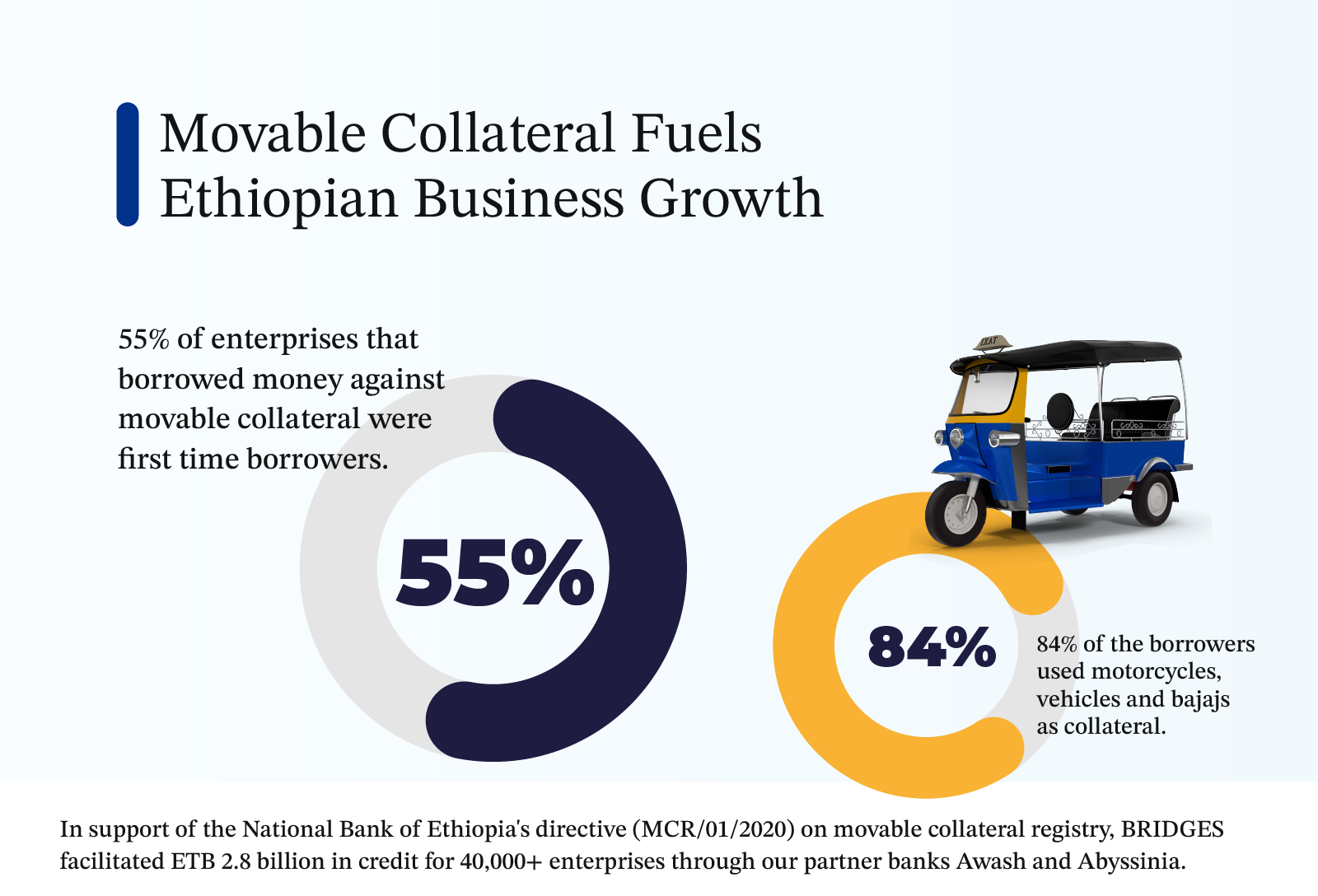
FC is collaborating with several private banks to allocate a portion of their annual disbursement to agriculture and MSMEs using movable collateral, in accordance with the central bank directive. Through this partnership, we connect banks and microfinance institutions (MFIs) in a wholesale credit facility, helping banks meet industry facilitating the flow of finance to MFIs
Credit guarantee management
Credit guarantee schemes (CGS) are designed to reduce the risk associated with lending to groups financial institutions consider high-risk and facilitate access to credit by improving loan terms. We design and implement development-oriented CGSs targeting medium, small and micro enterprises to help them get loan funding at low prices and easier conditions.
Customised product development
A review of existing financial products offered by banks and MFIs reveals that certain groups may be excluded due to targeting, know-your-client procedures, collateral requirements, credit risk assessments, loan sizes, and other credit conditions. Based on our assessments of the needs of both target groups and financial institutions, we co-design tailored products and support their implementation. We have provided access to finance through customized product development for groups such as women, youth, those seeking climate-responsive products, and individuals interested in sharia-compliant, interest-free banking.
Technical assistance to financial institutions
Financial institutions benefit from technical assistance that provides them with capabilities that enable them to access previously untapped market. They receive support on how to (re)design financial products and their access processes. First Consult provides technical assistance, including through digital courses and certification programmes, to scores of financial institutions of different sizes and types, from the Development Bank of Ethiopia, leasing companies, to commercial banks and microfinance institutions