
Software Engineer
Fitrstuser
Project Type: Ongoing project
Deadline: 07-03-2025
Location: Addis Ababa
We are seeking a highly skilled and motivated Software engineer with a strong understanding of AWS cloud services, full-stack development (both frontend and backend), user interface (UI) design, and the ability to analyze, define, and implement system requirements to meet business objectives. The ideal candidate will have at least two years of experience in software development and be comfortable working in a fast-paced, collaborative environment. As a Software Developer, you will play a critical role in designing, building, and maintaining web applications that are scalable, secure, and optimized for performance. You will work closely with stakeholders to translate business needs into technical requirements, ensuring that the systems you build are well-architected and meet both functional and non-functional requirements.
Duties and Responsiblities
- Design, develop, and maintain scalable frontend and backend systems.
- Collaborate with stakeholders and programme team to gather and analyze business requirements and translate them into technical specifications and system development/enhancement.
- Use AWS services to build and manage cloud-based applications and infrastructure, ensuring reliability and scalability.
- Implement user-friendly and visually appealing UIs, following best practices in design and user experience.
- Write clean, maintainable, and efficient code using modern frameworks and technologies.
- Conduct code reviews and collaborate with other developers to maintain high code quality and best practices.
- Troubleshoot, debug, and improve existing systems, ensuring they are robust and secure.
- Support data migration, review and handover of source codes and manage all systems developed under MESMER Programme.
- Ensure proper implementation of security and data protection mechanisms.
- Stay up to date with industry trends and emerging technologies to continuously improve the system architecture.
- Manage and regularly maintain MEMSER application portal and database
- Manage, maintain and provide user support and back-end management of MESMER’s digital platforms such as digital lending, Digital BDS and PSS,
- Oversee MESMER portal and enhance user experience and data encoding, storing and retrieving mechanisms to ensure accurate program reporting and results tracking,
- Collaborate with MERL team to ensure programme results and participant data are properly recorded, and retrieved for analysis and reporting
- Ensure all data related to all programme components is properly recorded and updated
- Enhance system output by regularly updating dashboards and reporting templates
Job requirements
- Strong experience with frontend frameworks like Vue.js, React, Svelt.
- Solid knowledge of backend technologies (Node.js, Go).
- Experience working with both relational (SQL) databases.
- Proficiency in gathering and analyzing business requirements to design and implement technical solutions.
- Experience in UI/UX design principles to ensure a smooth, intuitive user experience.
Education
- Bachelor’s degree in computer science, Software Engineering, or a related field.
- 2+ years of experience in software development.
- Proficiency with AWS services (e.g., EC2, S3, RDS, Lambda, VPC).
Experience
Skills
- Strong understanding of software architecture and design patterns.
- Excellent problem-solving skills and a keen eye for detail.
- Good communication and collaboration skills to work in a team-oriented environment.

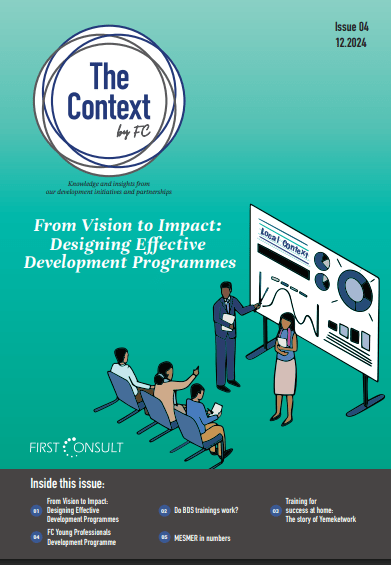
The Context - From Vision to Impact: Designing Effective Development Programmes
Resource information
The Context - Issue 4
Knowledge and insights from our development initiatives and partnerships
From Vision to Impact: Designing Effective Development Programmes
Year
2024
Pages
10
File type
Size
2633KB
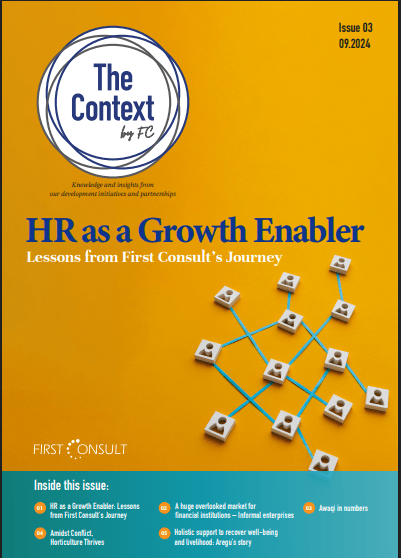
The Context - HR as a Growth Enabler
Resource information
The Context - Issue 3
Knowledge and insights from our development initiatives and partnerships
HR as a Growth Enabler
Lessons from First Consult’s Journey
Year
2024
Pages
10
File type
Size
11405KB
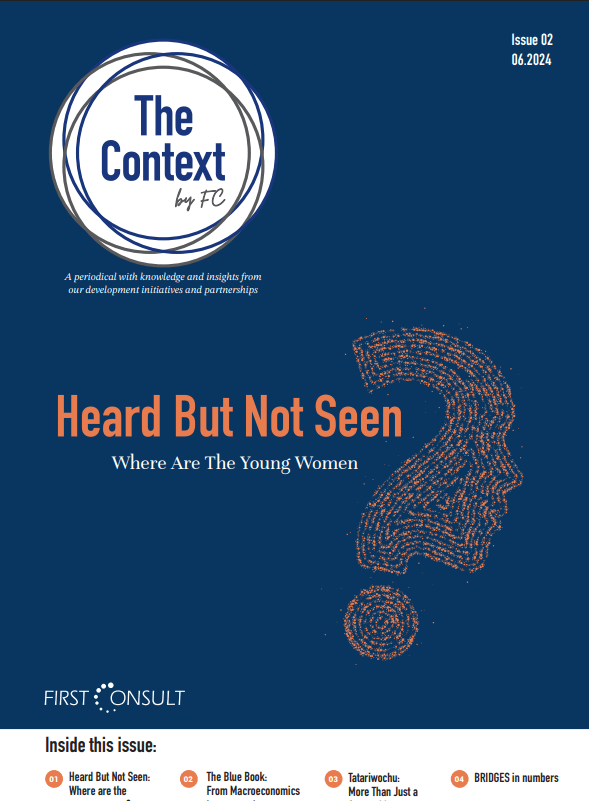
The Context - Heard But Not Seen
Resource information
The Context - Issue 2
A periodical with knowledge and insights from our development initiatives and partnerships
Heard But Not Seen
Where are the Young Women
Year
2024
Pages
8
File type
Size
2401KB
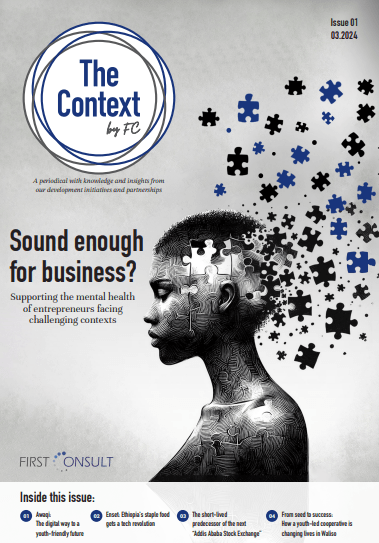
The Context - Sound Enough For Business?
Resource information
The Context - Issue 1
A periodical with knowledge and insights from our development initiatives and partnerships
Sound Enough for Business?
Supporting the mental health of entrepreneurs facing challenging contexts
Year
2024
Pages
10
File type
Size
11838kb
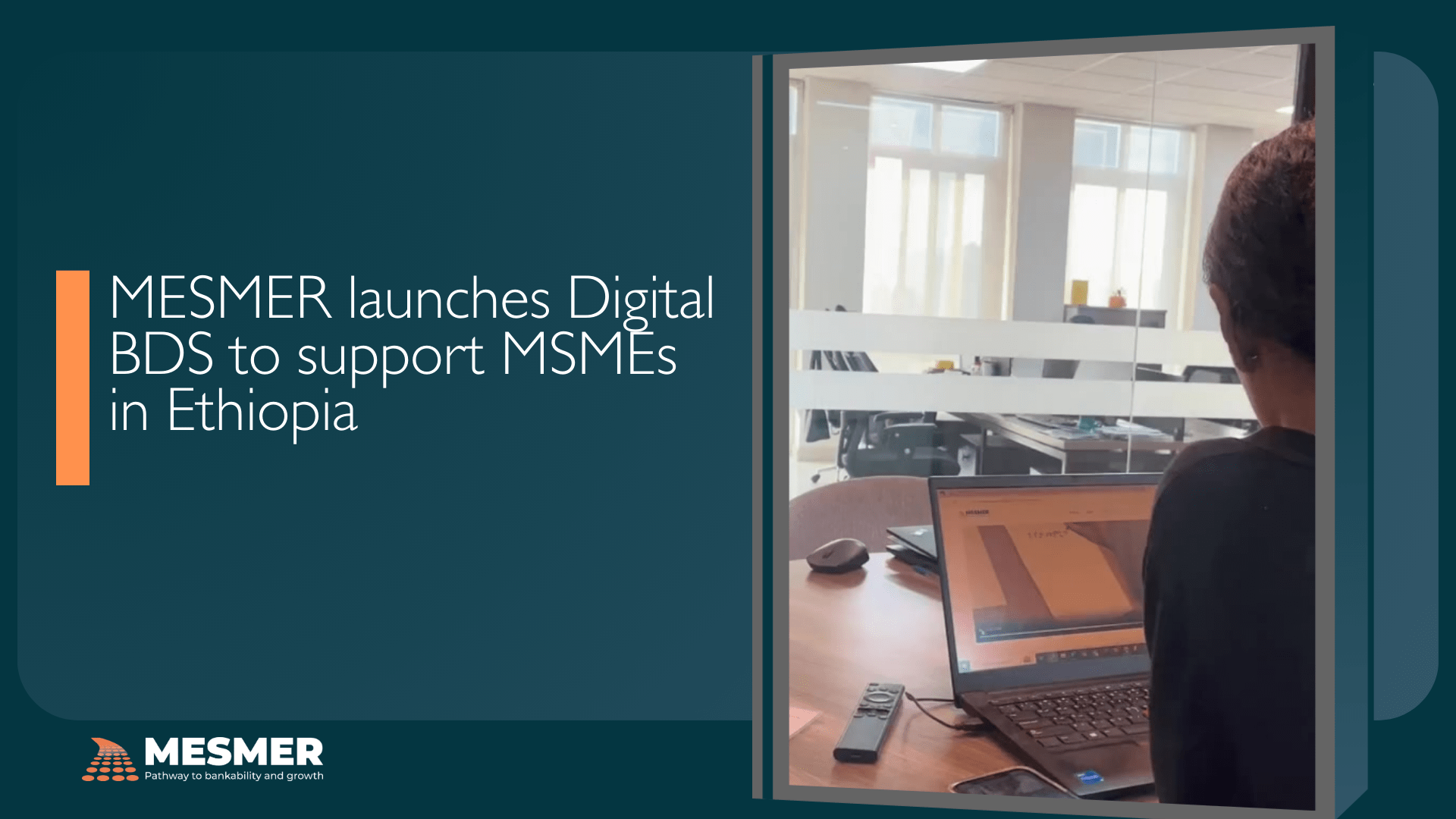
Announcement: MESMER Launches Digital BDS Platform to Support MSMEs in Ethiopia
Fitrstuser
The MESMER Programme has launched a new Digital Business Development Support (BDS) platform to empower Micro, Small, and Medium Enterprises (MSMEs) in Ethiopia grow and improve their businesses regardless of their location. This technology-driven platform brings expert guidance, training, and resources, accessible anytime, anywhere to MSMEs. No more barriers, no more downtime, just seamless access to business growth and knowledge.
“The fact that the course is self-paced and accessible any time makes it easier and convenient for them hence boosting sense of empowerment and self-reliance.” said Kenno Itana, Programme Lead of MESMER.
Practical and Easy-to-Use Platform
The platform offers eight training modules in Amharic, Afaan Oromo, Af Somali, and Tigrigna. These modules cover key business and financial skills that MSMEs need to grow and sustain their operations.
Key Features of the Training Modules:
- Video content: Breaks down complex ideas into simple, practical tips.
- Offline course notes: Helps participants review and understand topics better.
- Interactive quizzes: Ensures participants understand each topic before moving forward.
- Progress tracking and certification: Recognizes participants’ efforts and encourages them to keep learning.
The platform emphasizes practical skills, ensuring that participants can immediately apply what they learn to their businesses.
Using Technology to Reach More Entrepreneurs
The Digital BDS platform integrates a Learning Management System (LMS) with a Telegram bot. The LMS helps users easily navigate courses, track their progress, and receive certifications, while the Telegram bot provides a simple way to access learning materials and stay engaged.
As Ethiopia’s economy continues to evolve, MSMEs need the right skills and tools to succeed. The Digital BDS platform is designed to meet these needs, helping entrepreneurs adapt to changing market conditions and contribute to the country’s economic growth.
“MESMER aims to enhance the bankability of MSMEs by providing innovative and impactful support. This platform integrates seamlessly into that vision by enabling entrepreneurs to build capacities, overcome obstacles, and achieve long-term self-sufficiency.” Habtamu Ertiro, Development and BDS Manager at MESMER.
Share article
More From FC
Nothing found.
Bridges

2019 to 2024
Client
Mastercard Foundation
Sector
Manufacturing, youth employment
Target
530,000 Jobs 15,000 Enterprises
Regions
Federal, Addis Ababa, Amhara, Dire Dawa, Harari, Oromia, Sidama, Somali, SNNP
BRIDGES is a five-year programme (2019-2024) implemented by First Consult in partnership with the Mastercard Foundation, aiming to create 530,000 youth jobs with a focus on empowering women across Ethiopia.
The program supports youth and MSMEs in manufacturing through skills training, mindset development, market linkages, and access to finance. With over 35 interventions in industries like fishing, mining, and furniture making, BRIDGES addresses key barriers in skills, finance, and market access to create lasting impact.
The program operates through four strategic focus areas, or “bridges,” linking participants to new opportunities.
BRIDGES, one of the flagship programmes implemented by First Consult.
Strategic Focus Areas
Enterprise Development BRIDGE (EDB):
The Enterprise Development Bridge (EDB) empowers unemployed youth with life skills, employability training, and entrepreneurial support, including Business Development Services and industry-specific technical training. EDB also connects participants to financial institutions for funding opportunities.
A key digital initiative under EDB, Awaqi, is a youth focused online platform designed to foster entrepreneurship by providing engaging content on mindset development, entrepreneurship, and employability. Through social media and web platforms, Awaqi offers short videos, training materials, and job opportunities to help youth secure employment or start their own businesses.
The Workforce Development Bridge connects job seekers to industrial employment by streamlining recruitment and training for industrial parks. Through screening and orientation programs, it improves job placement and retention.
Key initiatives include the TATARI savings scheme, which helps workers adapt to new environments, and WEAR (Workers Engagement and Retention), an audio-visual training program covering urban transition, workplace safety, and life skills. Narrated by the character Aster, WEAR delivers engaging multilingual content to new workers and trainers across Ethiopia. BRIDGES has also created a generic version of WEAR to promote industrial work culture and skills transfer on a larger scale.
The Workers Engagement and Retention (WEAR) soft skills training programme
WEAR delivers essential knowledge for new factory workers, covering areas such as urban transition, workplace safety, and life skills, using engaging content narrated by a character named Aster. Available in multiple languages, these training materials are provided to workers and trainers across Ethiopia. BRIDGES has developed a generic version of WEAR to promote broader industrial work culture and skills transfer.
Access to Finance (A2F) Bridge
The Access to Finance (A2F) Bridge addresses the financial challenges of MSMEs by partnering with financial institutions to close the financing gap. It supports youth access to credit through policy revisions, capacity building, innovation, and creating linkages between enterprises and financial institutions.
As part of BRIDGES, A2F expands access to finance as a crosscutting initiative, benefiting workers in industrial parks and MSMEs across Ethiopia.
Enterprise Competitiveness Bridge (ECB)
The Enterprise Competitiveness Bridge (ECB) boosts the competitiveness of local manufacturers and suppliers. With Ethiopia’s foreign direct investments exceeding USD 4 billion annually, ECB helps local enterprises meet market demands from large FDI firms. This includes import substitution, building B2B relationships, and launching job creation projects.
ECB’s three-pronged approach supports local value addition, outsourcing, and technology transfer, helping enterprises seize opportunities and drive economic growth. By addressing market information gaps and fostering B2B connections, ECB contributes to job creation and strengthens Ethiopia’s manufacturing sector.
The Blue Book
Resource information
The Blue Book
Annual Report 2015 E.C. (2022/23)
Summary
How the Ethiopian economy is coping with change and uncertainty: The Microeconomy.
Year
2024
Pages
101
File type
Size
2mb
Enterprise Partners
Partner
UK Aid/Department for International Development
Target
Creating 45,000 jobs (75% female) and increasing the incomes of 65,000 poor households.
Sector
Leather, horticulture, cotton, labour sourcing, access to finance, private sector development
Year
2013-2020
Regional Presence
National-level, 10 regions of Ethiopia
Enterprise Partners (EP) was a UKaid-funded programme implemented by DAI, employing the market systems development approach in six sectors in Ethiopia from 2013 to 2020. It formed the major component of the UK Foreign, Commonwealth and Development Office (formerly DFID)’s flagship Private Enterprise Programme in Ethiopia (PEPE) implemented by DAI and a consortium of partners including First Consult, Itad, Enclude and BCaD.
The programme worked to change the way that markets work for the poor so that poor people are included in the benefits of growth and economic development as consumers, employees and investors. In each sector and sub-sector, Enterprise Partners identified key constraints and developed socially and environmentally sensitive strategies to transform markets by working with industry actors to introduce better business models.
Enterprise Partners worked through two major pillars:
Agro-Industry: In three of the government priority sectors – garments, leather and horticulture.
Access to Finance: Strengthening financial systems for increased investments for small, medium, and large enterprises as well as promoting private equity and foreign direct investment.
Knowledge Pieces
Nothing found.
Impact Stories
Nothing found.
Knowledge Pieces
No common posts found in the specified categories.
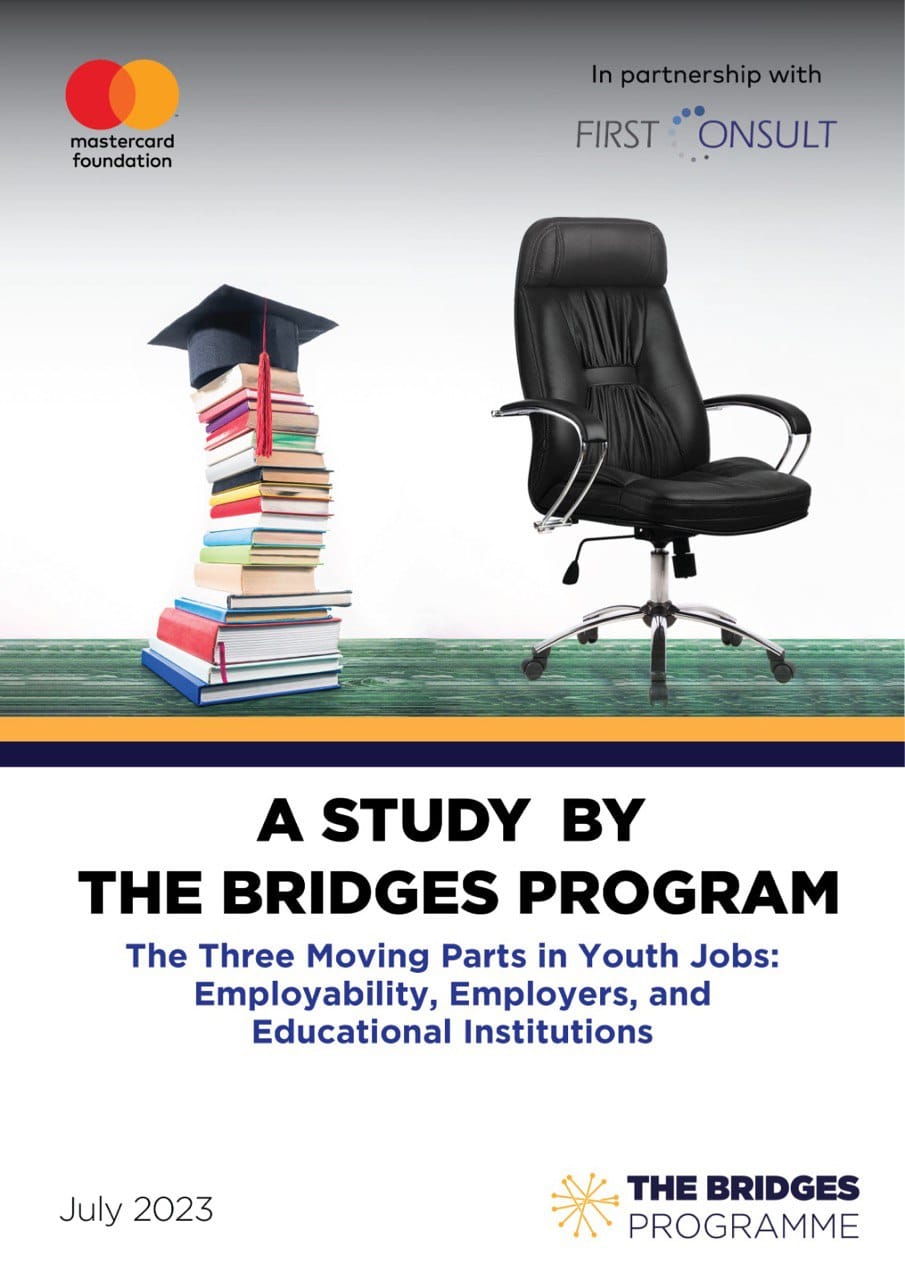
The Three Moving Parts in Youth Jobs: Employability, Employers and Educational institutions
Resource information
The Three Moving Parts in Youth Jobs: Employability, Employers and Educational institutions
Annual Report 2015 E.C. (2022/23)
Summary
This study surveyed over 200 fresh or recent graduates across Ethiopia, over 30 hiring and recruiting institutions, and 5 higher education institutes. The assessment also conducted a desk review, closely examining relevant practices...
Year
2024
Pages
9
File type
Size
628kb